
Skillsive
Free tool

VR headset comparison for training teams

Specs from manufacturer pages, filtered by what actually matters when you hand headsets to a crew — not by what looks good in a consumer review.

Pick up to four models and compare them side by side. Every figure below comes from the manufacturer's own spec page, with the date it was last checked, so you can quote it in a purchase request.

VR, AR, MR, XR — what the words actually mean

Four acronyms describe this hardware, and they are used loosely enough that two products both called "AR glasses" can have nothing measurable in common. Here is what each one means, and why this catalogue is organised the way it is.

VR — virtual reality
The display covers your eyes and the real room disappears. This is where full training simulations run: a trainee can make a mistake with real consequences and no real danger.
AR — augmented reality
You look through the lens and information is added on top of what you see. In industry that usually means guiding somebody through a task with their hands free, not gaming.
MR — mixed reality
Virtual objects are anchored to the real room and stay where you put them. On modern headsets this is done with colour passthrough cameras rather than see-through glass.
XR — extended reality
The umbrella term for all of the above. It exists because the boundary keeps moving: one headset today does VR, MR and passthrough AR depending on the app.

Six categories, because "AR glasses" is four different products

Filtering by category is the first useful thing you can do here. A monocular screen on a hard hat and a pair of camera glasses share a shape and nothing else — comparing them in one table would be a wall of dashes.

  • VR — standalone

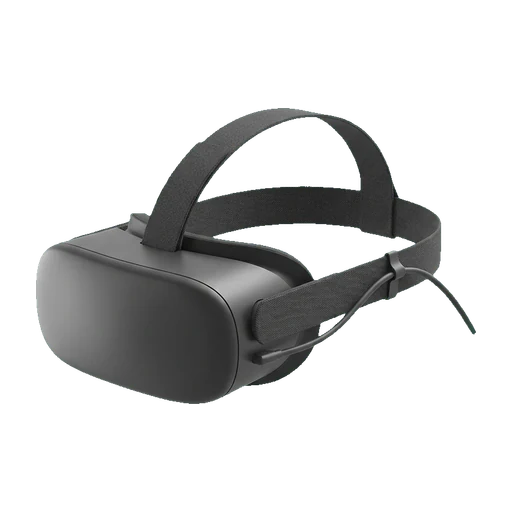
    A headset with its own computer inside. This is where corporate training runs.

    Browse this category
  • VR — PC-tethered

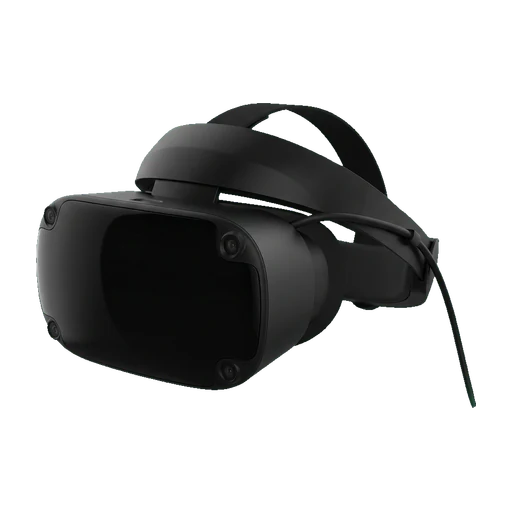
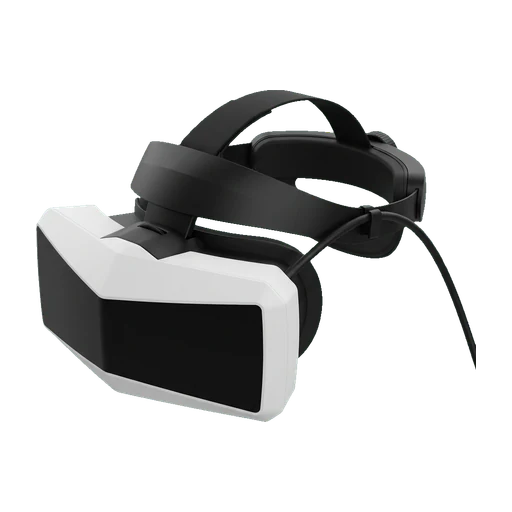
    A headset that renders on a PC. Highest fidelity, but our courses do not run on it.

    Browse this category
  • AR — industrial

    A monocular screen on a helmet or frame: hands-free work and remote expert support.

    Browse this category
  • AR — spatial

    True AR — content anchored in the room, tracked in six degrees of freedom.

    Browse this category
  • AR — wearable display

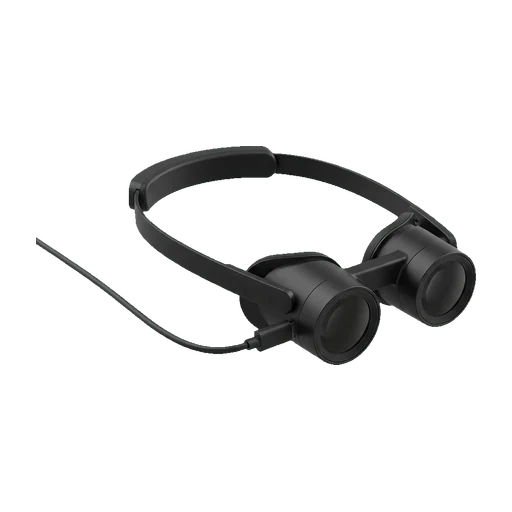
    A virtual monitor over USB-C. An external screen you wear, not a computer.

    Browse this category
  • AI glasses

    Camera, audio and an assistant. Little or no display, and a closed platform.

    Browse this category

Headset comparison tool

Everything sold as AR glasses, in one list.

Deployment

57 headsets

  • Meta Quest 3S

    Meta · 2024

    We recommend
    Standalone VR, also PC-poweredEntry level
    Resolution per eye
    1832x1920
    Weight
    514 g
    Refresh rate
    72 / 90 / 120 Hz
    Colour passthrough
    Yes
    • Training-ready
    • Skillsive apps run on it

    Specs verified on 2026-07-21

    Details
  • Meta Quest 3

    Meta · 2023

    We recommend
    Standalone VR, also PC-poweredMid range
    Resolution per eye
    2064x2208
    Weight
    515 g
    Refresh rate
    72 / 90 / 120 Hz
    Colour passthrough
    Yes
    • Training-ready
    • Skillsive apps run on it

    Specs verified on 2026-07-21

    Details
  • PICO 4 Ultra

    PICO (ByteDance) · 2024

    Supported
    Standalone VR, also PC-poweredMid range
    Resolution per eye
    2160x2160
    Weight
    580 g
    Refresh rate
    90 Hz
    Colour passthrough
    Yes
    • Training-ready
    • Skillsive apps run on it

    Specs verified on 2026-07-21

    Details
  • PICO 4 Ultra Enterprise

    PICO (ByteDance) · 2024

    Supported
    Standalone VR, also PC-poweredEnterprise
    Resolution per eye
    2160x2160
    Weight
    580 g
    Refresh rate
    90 Hz
    Colour passthrough
    Yes
    • Training-ready
    • Kiosk / MDM
    • Skillsive apps run on it

    Specs verified on 2026-07-21

    Details
  • VIVE Focus Vision

    HTC VIVE · 2024

    Supported
    Standalone VR, also PC-poweredEnterprise
    Resolution per eye
    2448x2448
    Weight
    785 g
    Refresh rate
    90 / 120 Hz
    Colour passthrough
    Yes
    • Training-ready
    • Kiosk / MDM
    • Skillsive apps run on it

    Specs verified on 2026-07-21

    Details
  • VIVE XR Elite

    HTC VIVE · 2023

    Supported
    Standalone VR, also PC-poweredPremium
    Resolution per eye
    1920x1920
    Weight
    Refresh rate
    90 Hz
    Colour passthrough
    Yes
    • Training-ready
    • Skillsive apps run on it

    Specs verified on 2026-07-21

    Details
  • PICO 4 Enterprise

    PICO (ByteDance) · 2022

    Newer model available
    Standalone VR, also PC-poweredEnterprise
    Resolution per eye
    2160x2160
    Weight
    591 g
    Refresh rate
    72 / 90 Hz
    Colour passthrough
    Yes
    • Training-ready
    • Kiosk / MDM
    • Skillsive apps run on it

    Specs verified on 2026-07-30

    Details
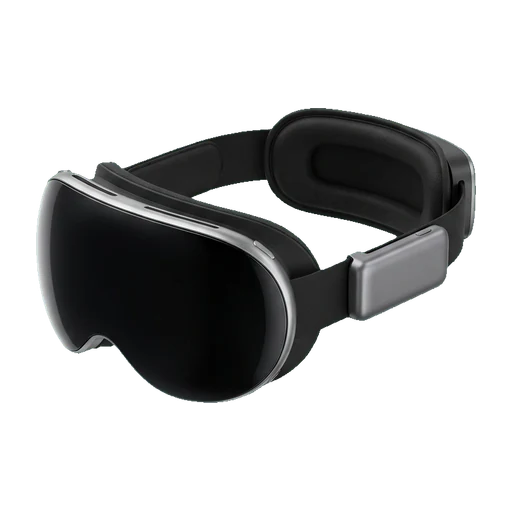
  • Apple Vision Pro

    Apple · 2025

    Not for our training
    Standalone VRPremium
    Resolution per eye
    3660x3200
    Weight
    478 g
    Refresh rate
    90 / 96 / 100 / 120 Hz
    Colour passthrough
    Yes

    Specs verified on 2026-07-21

    Details
  • Play For Dream MR

    Play For Dream · 2025

    Not for our training
    Standalone VR, also PC-poweredPremium
    Resolution per eye
    3840x3552
    Weight
    Refresh rate
    90 Hz
    Colour passthrough
    Yes

    Specs verified on 2026-07-30

    Details
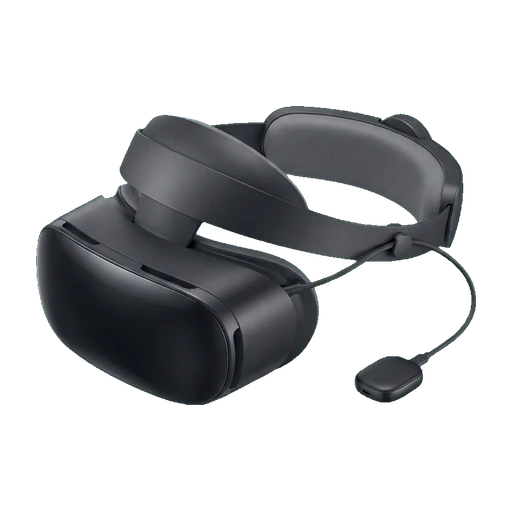
  • Samsung Galaxy XR

    Samsung · 2025

    Not for our training
    Standalone VRPremium
    Resolution per eye
    3552x3840
    Weight
    545 g
    Refresh rate
    60 / 72 / 90 Hz
    Colour passthrough
    Yes

    Specs verified on 2026-07-30

    Details
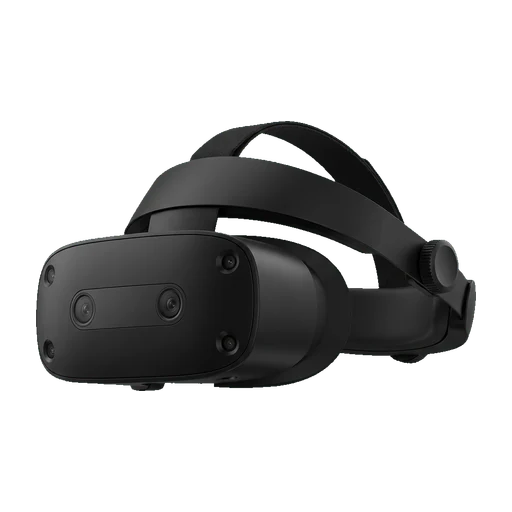
  • Lenovo ThinkReality VRX

    Lenovo · 2023

    Not for our training
    Standalone VR, also PC-poweredEnterprise
    Resolution per eye
    2280x2280
    Weight
    830 g
    Refresh rate
    72 / 90 Hz
    Colour passthrough
    Yes
    • Kiosk / MDM

    Specs verified on 2026-07-30

    Details
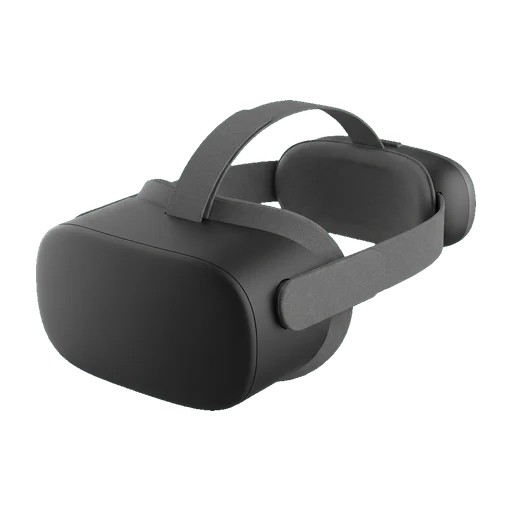
  • PICO G3

    PICO (ByteDance) · 2022

    Not for our training
    Standalone VREnterprise
    Resolution per eye
    1832x1920
    Weight
    604 g
    Refresh rate
    72 / 90 Hz
    Colour passthrough
    No
    • Kiosk / MDM

    Specs verified on 2026-07-30

    Details
  • RealWear Arc 3

    RealWear · 2025

    Standalone AREnterprise
    Display
    Micro-OLED, one eye
    Weight
    175 g
    Brightness
    Third-party apps
    Ordinary Android app (APK)
    • Kiosk / MDM

    Specs verified on 2026-08-04

    Details
  • Vuzix LX1

    Vuzix · 2025

    Standalone AREnterprise
    Display
    Micro-OLED, one eye
    Weight
    Brightness
    2000 nits
    Third-party apps
    Ordinary Android app (APK)
    • Kiosk / MDM

    Specs verified on 2026-08-04

    Details
  • RealWear Navigator 520

    RealWear · 2023

    Standalone AREnterprise
    Display
    Micro-LED, one eye
    Weight
    274 g
    Brightness
    Third-party apps
    Ordinary Android app (APK)
    • Kiosk / MDM

    Specs verified on 2026-08-04

    Details
  • RealWear Navigator Z1

    RealWear · 2023

    Standalone AREnterprise
    Display
    Micro-LED, one eye
    Weight
    383 g
    Brightness
    Third-party apps
    Ordinary Android app (APK)
    • Kiosk / MDM

    Specs verified on 2026-08-04

    Details
  • AR with a compute puckEnterprise
    Display
    Micro-OLED, both eyes
    Weight
    Brightness
    Third-party apps
    Ordinary Android app (APK)

    Specs verified on 2026-08-04

    Details
  • Vuzix M4000

    Vuzix · 2020

    Standalone AREnterprise
    Display
    Waveguide
    Weight
    99 g
    Brightness
    1000 nits
    Third-party apps
    Ordinary Android app (APK)
    • Kiosk / MDM

    Specs verified on 2026-08-04

    Details
  • Vuzix M400

    Vuzix · 2019

    Standalone AREnterprise
    Display
    Micro-OLED, one eye
    Weight
    Brightness
    2000 nits
    Third-party apps
    Ordinary Android app (APK)
    • Kiosk / MDM

    Specs verified on 2026-08-04

    Details
  • Phone-powered AREnterprise
    Display
    LCD, one eye
    Weight
    78 g
    Brightness
    Third-party apps
    App lives on the phone

    Specs verified on 2026-08-04

    Details
  • Iristick.G3

    Iristick

    Phone-powered AREnterprise
    Display
    Micro-OLED, one eye
    Weight
    95 g
    Brightness
    2000 nits
    Third-party apps
    App lives on the phone

    Specs verified on 2026-08-04

    Details
  • RayNeo X3 Pro

    RayNeo · 2025

    Standalone ARPremium
    Display
    Waveguide
    Weight
    76 g
    Brightness
    6000 nits
    Third-party apps
    Ordinary Android app (APK)

    Specs verified on 2026-08-04

    Details
  • Pimax Crystal

    Pimax · 2023

    Newer model available
    PC-powered VRPremium
    Resolution per eye
    2880x2880
    Weight
    Refresh rate
    72 / 90 / 120 Hz
    Colour passthrough
    No

    Specs verified on 2026-07-30

    Details
  • Bigscreen Beyond 2

    Bigscreen · 2025

    Not for our training
    PC-powered VRPremium
    Resolution per eye
    2560x2560
    Weight
    107 g
    Refresh rate
    75 / 90 Hz
    Colour passthrough
    No

    Specs verified on 2026-07-30

    Details
  • Bigscreen Beyond 2e

    Bigscreen · 2025

    Not for our training
    PC-powered VRPremium
    Resolution per eye
    2560x2560
    Weight
    107 g
    Refresh rate
    75 / 90 Hz
    Colour passthrough
    No

    Specs verified on 2026-07-30

    Details
  • Pimax Crystal Super

    Pimax · 2025

    Not for our training
    PC-powered VRPremium
    Resolution per eye
    3840x3840
    Weight
    Refresh rate
    72 / 90 Hz
    Colour passthrough
    No

    Specs verified on 2026-07-30

    Details
  • Pimax Dream Air

    Pimax · 2025

    Not for our training
    PC-powered VRPremium
    Resolution per eye
    3840x3552
    Weight
    170 g
    Refresh rate
    90 Hz
    Colour passthrough
    No

    Specs verified on 2026-07-30

    Details
  • Pimax Dream Air SE

    Pimax · 2025

    Not for our training
    PC-powered VRPremium
    Resolution per eye
    2560x2560
    Weight
    140 g
    Refresh rate
    72 / 90 Hz
    Colour passthrough
    No

    Specs verified on 2026-07-30

    Details
  • Shiftall MeganeX 8K Mark II

    Shiftall · 2025

    Not for our training
    PC-powered VRPremium
    Resolution per eye
    3552x3840
    Weight
    179 g
    Refresh rate
    72 / 75 / 90 Hz
    Colour passthrough
    No

    Specs verified on 2026-07-30

    Details
  • Pimax Crystal Light

    Pimax · 2024

    Not for our training
    PC-powered VRPremium
    Resolution per eye
    2880x2880
    Weight
    Refresh rate
    72 / 90 / 120 Hz
    Colour passthrough
    No

    Specs verified on 2026-07-30

    Details
  • Somnium VR1

    Somnium Space · 2024

    Not for our training
    PC-powered VRPremium
    Resolution per eye
    2880x2880
    Weight
    Refresh rate
    90 / 120 / 144 Hz
    Colour passthrough
    No

    Specs verified on 2026-07-30

    Details
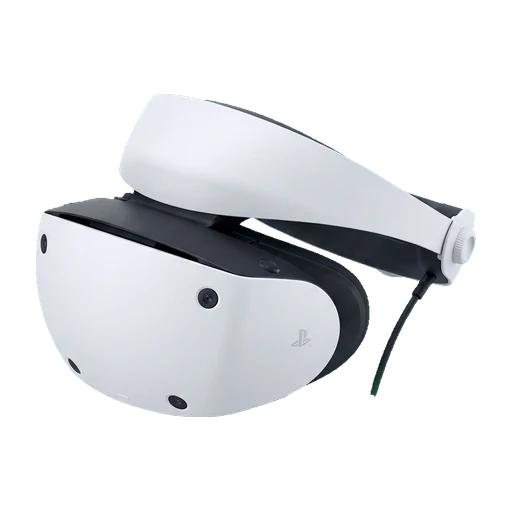
  • PlayStation VR2

    Sony · 2023

    Not for our training
    PC-powered VRMid range
    Resolution per eye
    2000x2040
    Weight
    Refresh rate
    90 / 120 Hz
    Colour passthrough
    No

    Specs verified on 2026-07-30

    Details
  • Varjo XR-4 Series

    Varjo · 2023

    Not for our training
    PC-powered VREnterprise
    Resolution per eye
    3840x3744
    Weight
    665 g
    Refresh rate
    90 Hz
    Colour passthrough
    Yes

    Specs verified on 2026-07-30

    Details
  • Valve Index

    Valve · 2019

    Not for our training
    PC-powered VRPremium
    Resolution per eye
    1440x1600
    Weight
    Refresh rate
    80 / 90 / 120 / 144 Hz
    Colour passthrough
    No

    Specs verified on 2026-07-30

    Details
  • VITURE Beast

    VITURE · 2026

    Phone-powered ARMid range
    Display
    Birdbath optics
    Weight
    88 g
    Brightness
    1250 nits
    Third-party apps
    App lives on the phone

    Specs verified on 2026-08-04

    Details
  • Rokid AR Spatial

    Rokid · 2025

    AR with a compute puckPremium
    Display
    Birdbath optics
    Weight
    75 g
    Brightness
    600 nits
    Third-party apps
    Ordinary Android app (APK)

    Specs verified on 2026-08-04

    Details
  • VITURE Luma Pro

    VITURE · 2025

    Phone-powered ARMid range
    Display
    Birdbath optics
    Weight
    79 g
    Brightness
    1000 nits
    Third-party apps
    App lives on the phone

    Specs verified on 2026-08-04

    Details
  • XREAL One Pro

    XREAL · 2025

    Phone-powered ARMid range
    Display
    Birdbath optics
    Weight
    87 g
    Brightness
    700 nits
    Third-party apps
    App lives on the phone

    Specs verified on 2026-08-04

    Details
  • Rokid Max 2

    Rokid · 2024

    Phone-powered ARMid range
    Display
    Birdbath optics
    Weight
    75 g
    Brightness
    600 nits
    Third-party apps
    App lives on the phone

    Specs verified on 2026-08-04

    Details
  • XREAL Air 2 Ultra

    XREAL · 2024

    Phone-powered ARPremium
    Display
    Birdbath optics
    Weight
    80 g
    Brightness
    500 nits
    Third-party apps
    App lives on the phone

    Specs verified on 2026-08-04

    Details
  • XREAL One

    XREAL · 2024

    Phone-powered ARMid range
    Display
    Birdbath optics
    Weight
    84 g
    Brightness
    600 nits
    Third-party apps
    App lives on the phone

    Specs verified on 2026-08-04

    Details
  • XREAL Air 2 Pro

    XREAL · 2023

    Phone-powered ARMid range
    Display
    Birdbath optics
    Weight
    75 g
    Brightness
    Third-party apps
    App lives on the phone

    Specs verified on 2026-08-04

    Details
  • PC-powered AREnterprise
    Display
    See-through, both eyes (type not stated)
    Weight
    130 g
    Brightness
    Third-party apps
    App lives on the phone

    Specs verified on 2026-08-04

    Details
  • Even G2

    Even Realities · 2025

    Phone-powered ARPremium
    Display
    Waveguide
    Weight
    36 g
    Brightness
    1200 nits
    Third-party apps
    App lives on the phone

    Specs verified on 2026-08-04

    Details
  • Phone-powered ARPremium
    Display
    Waveguide
    Weight
    69 g
    Brightness
    Third-party apps
    App lives on the phone

    Specs verified on 2026-08-04

    Details
  • Phone-powered ARMid range
    Display
    No display
    Weight
    Brightness
    Third-party apps
    App lives on the phone

    Specs verified on 2026-08-04

    Details
  • Rokid Glasses

    Rokid · 2025

    Standalone ARMid range
    Display
    Waveguide
    Weight
    49 g
    Brightness
    1500 nits
    Third-party apps
    Vendor SDK only

    Specs verified on 2026-08-04

    Details
  • Brilliant Labs Frame

    Brilliant Labs · 2024

    Phone-powered AREntry level
    Display
    Micro-OLED, one eye
    Weight
    Brightness
    Third-party apps
    Vendor SDK only

    Specs verified on 2026-08-04

    Details
  • Halliday G2

    Halliday

    Phone-powered ARMid range
    Display
    Waveguide
    Weight
    Brightness
    1600 nits
    Third-party apps
    Closed platform

    Specs verified on 2026-08-04

    Details
  • PICO Project Swan

    PICO (ByteDance) · 2026

    Announced for 2026-Q4Supported
    Standalone VR
    Resolution per eye
    Weight
    Refresh rate
    Colour passthrough
    Yes
    • Skillsive apps run on it

    Specs verified on 2026-08-03

    Details
  • Valve Steam Frame

    Valve · 2026

    Announced for 2026-Q3Not for our training
    Standalone VR, also PC-powered
    Resolution per eye
    2160x2160
    Weight
    185 g
    Refresh rate
    72 / 90 / 120 / 144 Hz
    Colour passthrough
    No

    Specs verified on 2026-08-03

    Details
  • Snap Specs

    Snap · 2026

    Announced for 2026-Q4
    Standalone ARPremium
    Display
    Waveguide
    Weight
    132 g
    Brightness
    Third-party apps
    Vendor SDK only

    Specs verified on 2026-08-04

    Details
  • XREAL Aura

    XREAL · 2026

    Announced for 2026-Q4
    AR with a compute puck
    Display
    Birdbath optics
    Weight
    Brightness
    Third-party apps
    Ordinary Android app (APK)

    Specs verified on 2026-08-04

    Details
  • Acer AR Vision GR0

    Acer · 2026

    Announced for 2026-Q4
    Phone-powered ARMid range
    Display
    Micro-OLED, both eyes
    Weight
    69 g
    Brightness
    200 nits
    Third-party apps
    App lives on the phone

    Specs verified on 2026-08-04

    Details
  • Acer GI0 AI Glasses

    Acer · 2026

    Announced for 2026-Q4
    Phone-powered AREntry level
    Display
    No display
    Weight
    46 g
    Brightness
    Third-party apps
    App lives on the phone

    Specs verified on 2026-08-04

    Details
  • Samsung Intelligent Eyewear

    Samsung / Google · 2026

    Announced for 2026-Q4
    Phone-powered AR
    Display
    No display
    Weight
    Brightness
    Third-party apps
    App lives on the phone

    Specs verified on 2026-08-04

    Details
Meta Business Partner

As a Meta Business Partner, our VR training applications are built and tuned for Meta Quest — the headset most companies deploy — and we support you in choosing and rolling out the right hardware.

Not sure which headset to buy for training in your company? We help teams pick the right VR/AR hardware for their rollout — and tell you honestly when the cheaper model is enough.

Help me choose

This comparison is a data set, not an opinion piece. Here is exactly how it is put together, so you can judge whether to trust a row before you quote it.

  • Every specification is copied from the manufacturer’s own page, linked per model below, with the date we last checked it.
  • Where a manufacturer does not publish a figure, the cell shows a dash. Where a credible teardown or hands-on measurement exists — Apple's per-eye resolution, the weights HTC and PICO never state — we show it prefixed with “≈” and an asterisk linking to whoever measured it. What we never do is pass a third-party number off as the vendor's own.
  • “Kiosk mode / MDM” and “Business tier” mean available from the vendor to a new customer today. This is why Meta Quest scores “no” on both despite being the most deployed training headset in the world: Meta stopped selling its commercial SKUs and Horizon Managed Services on 20 February 2026. Third-party fleet management still covers it.
  • “Performance” is our own five-point grade, not a benchmark — see the note under any model’s meter for what it is based on and why a number would be misleading.

Specifications change with firmware updates and hardware revisions. Before you order, open the manufacturer link on the model page and confirm the figures that matter to your decision.

Manufacturer sources

Product and company names belong to their respective owners and are used here only to identify the hardware compared.

Product and company names used here are the trademarks of their respective owners and appear only to identify the hardware being compared. We are not affiliated with, sponsored by or endorsed by any of these manufacturers. Illustrations are our own.

Which VR headsets are suitable for workplace safety training?

For most safety training, a standalone headset with colour passthrough and a wipeable facial interface is enough. The deciding factors are rarely resolution: you need a device you can charge overnight, hand to a different person every twenty minutes, clean between users, and lock to a single application so nobody wanders into a browser. That is why the filters above sit on kiosk mode, hygiene and fleet management rather than on pixel counts.

What do we recommend? Meta Quest first

Our position today is straightforward: for most companies we recommend Meta Quest. Not because the competition is weak, but because Quest is the most widely available and most commonly deployed headset on the market, we have tested our courses on it the most, and our applications are tuned for it — so it is the setup where everything simply works from day one. That said, our courses are not locked to one manufacturer: they run on PICO and HTC VIVE headsets too, because we build on open XR standards rather than a single vendor's SDK. If a course does not run on the hardware you already own, we can adapt it — talk to us before you change your fleet. And if the training belongs on a phone rather than in a headset, we can build an AR safety application for iOS and Android as well, so every employee can run it on the device already in their pocket.

Standalone or tethered to a PC?

Standalone wins for training almost every time. No cables to trip over in a room full of trainees, no gaming PC per station, and a crew can be trained in a warehouse corner instead of a lab. A PC-tethered setup is worth it only when the simulation genuinely needs desktop-class rendering — high-fidelity machinery, large CAD models, or eye-tracked research work.

What to check before a company-wide rollout

Four things decide whether twenty headsets are manageable or a burden: a device management console (push an app to every unit without touching them), kiosk mode (the device boots straight into your training and nothing else), swappable facial interfaces (hygiene between users, and they are consumables), and a business licence tier so the devices are not tied to personal accounts. A model that scores well on specs but fails these will cost more in admin time than it saved on purchase.

The four classes, and why the difference matters

Industrial glasses put a small screen in the corner of one eye so hands stay on the work. Spatial AR anchors content in the room and tracks your position in it. Wearable displays are a monitor you wear — the image comes from a phone or PC on a cable. AI glasses have a camera, microphones and an assistant, and usually no screen at all. Only the first two can guide a worker through a task.

Can you run your own application on it?

This is the question a spec sheet never answers. A standalone Android device takes an ordinary APK and can be managed by an MDM, which is where a training application is realistic. A vendor-SDK platform needs a build written for that platform, which is a project, not a deployment. On a wearable display the application lives on the connected phone or PC. On closed AI glasses there is no third-party path at all. To be plain about our own catalogue: Skillsive training courses are VR applications, and none of them runs on AR eyewear of any class — including the industrial glasses that would technically accept the package. Custom AR work is a separate service, not something you can filter for here.

Which headsets can you actually buy in Poland?

Official availability matters more than it sounds: it decides warranty handling, VAT invoicing and how quickly you can replace a broken unit. Use the “Available in Poland” filter to narrow the list to models with an official distribution channel, and check the manufacturer page linked on each model card before ordering — availability changes faster than specifications do.

Coming soon: headsets announced but not yet released

Hardware whose maker has announced it officially, with the release window it stated. Everything the manufacturer has not published — prices above all — is missing here rather than filled in from leaks.

Frequently asked questions

Which VR headset is best for corporate safety training?
For most companies, a standalone headset with colour passthrough, kiosk mode and a wipeable facial interface. Resolution matters far less than whether you can manage a fleet of them and clean them between users. Use the deployment filters above to see which models meet all four conditions at once.
Is Meta Quest 3 suitable for business use?
Yes — it is the most common headset in corporate VR training today, because it is standalone, widely available and covered by Meta's business device management. What you need to add is the business licence tier, so the headsets are enrolled to the company rather than to employees' personal accounts.
What is colour passthrough (MR) and does training need it?
Passthrough shows the real room through the headset's cameras, so a trainee can see where they are standing without taking the device off. For training it mainly buys safety and comfort: instructors can hand over objects, and people prone to motion discomfort keep a visual anchor to the real room.
Which headsets support kiosk mode and device management?
The models marked “Kiosk mode / MDM” in the comparison. Kiosk mode locks the headset into a single application so it boots straight into the training, and device management lets you install and update that application on every unit remotely. Both are a practical requirement above roughly ten devices.
How current are these specifications?
Every model carries the date it was last verified against the manufacturer's specification page, shown on its card and on its detail page. Specifications do change through firmware updates and hardware revisions, so check the linked manufacturer page before placing an order.
What is the difference between AR glasses and VR goggles?
VR goggles replace what you see with a simulated environment, so a trainee can practise a dangerous procedure safely. AR glasses add information to the real view — a checklist, a value, a remote expert's marker — while the work is being done. VR is for before, AR is for during.
Which AR glasses can run a training application?
Only devices with their own Android platform take an ordinary application package and can be managed centrally — that is the industrial class and part of the spatial one. Wearable displays run nothing themselves: the application lives on the phone or PC that drives them. Closed AI glasses have no third-party path at all.
Are AR glasses safe to use in an explosion hazard zone?
Only where the manufacturer states the certification — ATEX or IECEx — for that exact model or its dedicated variant. It is a statement about people's safety, so it has to come from the vendor's own page. In this comparison the certification field stays empty when the manufacturer does not confirm it.
Are AI glasses like Ray-Ban Meta useful for work?
For recording and for voice assistance, sometimes. Not for guiding a task: with no display, or with only a small notification HUD, they cannot show a work instruction, a schematic or a measured value. That is a property of the class, not a shortcoming of one model.
Do HoloLens 2 and Magic Leap 2 still make sense in 2026?
For a fleet that already owns them, yes, until support ends. For a new deployment, no: both platforms have been wound down, and building a new application on a platform with a published end of support means paying for a migration you can already see coming.