
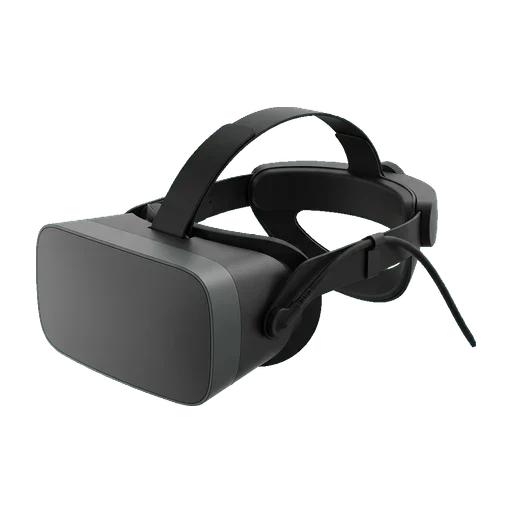
Varjo VR-2 — specification and verdict
The VR-2 built its case on one idea: put a small, extremely dense micro-OLED where you are looking and a wider AMOLED around it. Varjo called the result over 60 pixels per degree, and for reading an instrument at true scale nothing else in 2019 came close. Everything around that idea was industrial rather than consumer — automatic motorised IPD so a headset could pass between operators without recalibration, 100 Hz eye tracking to sub-degree accuracy, and a tether to SteamVR base stations you bought separately. What the spec sheet never showed is the entry price: Varjo attached a mandatory software and support subscription of 795 euro a year to every unit, minimum one year, on top of the 4,995 dollars.
The number that decides a VR-2 rollout is not on the spec sheet. Varjo attached a mandatory Software and Support subscription to every unit — 795 euro a year for the VR-2, minimum one year, explicitly worded as added to the price of all purchases — which puts real entry at about 5,790 euro per seat before you buy a single base station or controller. Neither is in the box: the VR-2 needs SteamVR base stations, ideally four for room-scale, and SteamVR controllers, all purchased separately. Varjo shipped to 35 countries for business use only, and support has since stopped moving: the last release the company recommends for this generation is Varjo Base 3.7.2, with no dated end-of-life notice.
Historical interest only. Our courses are Android standalone builds and this is a SteamVR headset, so they never ran on it and never will. If you have inherited a VR-2, the honest reading is that the hardware still resolves detail almost nothing else does, and that everything around it has stopped — no current software, no dated support commitment, and a base-station dependency that ties it to one room. Do not buy one now; if the requirement is genuinely reading fine detail at scale, the XR-4 line is where Varjo continued the idea.
How it compares within its class
The axis runs from the lowest to the highest published figure among the VR — PC-tethered devices in this catalogue. The grey tick is the median of that class.
Median for this class: 110°, from 39 models that publish the figure.
Median for this class: 500 g, from 26 models that publish the figure.
Median for this class: $899, from 45 models that publish the figure.
Controllers and hand tracking
Controller
6DoF
Sold separatelyHow it is tracked
Base stations (Lighthouse)
Base stations sweep the room with lasers. Coverage comes from where the boxes are mounted rather than from what the headset can see — occlusion stops being a problem, and the boxes are a second purchase.
Other controllers
Any SteamVR (Lighthouse) controller
Index Controller · HTC Vive controller
Bare hands
No hand tracking — a controller is the only way in.
Full specification
An em dash means the manufacturer does not publish that figure.
- ManufacturerWho makes it — and who you buy support from.
- Varjo
- CategoryWhich kind of product this is. It decides which rows below make sense at all.
- VR — PC-tethered
- Device typeWhere the computing happens, and therefore what you need to run it.
- PC-powered VR
- AnnouncedThe day it was shown, which is not the day it shipped.
- 2019-10-15
- ReleasedYear the model went on sale. Older is not automatically worse in this category.
- 2019
- AvailabilityWhether you can still order it new today.
- Discontinued
- Support endsThe date the manufacturer stops supporting it. Decisive for a fleet you are about to buy.
- Support ends: not published by the manufacturer
- PanelThe screen type. micro-OLED gives deeper blacks and higher contrast; LCD is brighter and cheaper.
- OLED
- OpticsThe lenses in front of the panel. Pancake stays sharp closer to the edges than older Fresnel, which decides how much a trainee has to aim their head to read something.
- Optics: not published by the manufacturer
- Eyes coveredOne eye or both. Over a full shift this is a real difference in fatigue.
- Both eyes
- Resolution per eyePixels delivered to each eye. Higher means small text and labels stay readable.
- 1440x1600
- Refresh rateImages per second. Higher feels smoother and helps people prone to motion discomfort.
- 60/90 Hz
- Field of viewHow much of your view the image covers. Bigger is more immersive, not automatically better for work.
- 87°
- Pixel densityPixels per degree of view — the honest way to compare sharpness between a headset and a pair of glasses. Higher is sharper. Only shown where somebody published it; we never compute it ourselves.
- Pixel density: not published by the manufacturer
- BrightnessIn a plant or outdoors, brightness decides legibility more than resolution does.
- Brightness: not published by the manufacturer
- WeightThe device alone. Anything above roughly 150 g is felt within an hour.
- 605 g
- Visible field of viewWhat the eye actually sees through the optics, by axis.
- Visible field of view: not published by the manufacturer
- Rendered field of viewWhat the device draws. Never smaller than what you see.
- Rendered field of view: not published by the manufacturer
- Binocular overlapWhere both eyes see the same thing — this is where depth happens.
- Binocular overlap: not published by the manufacturer
- Average pixel densityPixels per degree across the image. More is sharper.
- Average pixel density: not published by the manufacturer
- Peak pixel densityThe sharpest point, usually the centre of the lens.
- Peak pixel density: not published by the manufacturer
- Subpixel layoutHow the coloured dots sit in a pixel. A stripe looks cleaner on text than PenTile.
- Subpixel layout: not published by the manufacturer
- Foveated renderingWhether detail is dropped outside where you look, to save performance.
- Foveated rendering: not published by the manufacturer
- PassthroughWhat the front cameras give you: colour, grayscale, or nothing.
- None
- Passthrough camerasResolution, density and frame rate of that camera feed.
- Passthrough cameras: not published by the manufacturer
- IPD adjustmentMatching lens spacing to the eyes. Motorised is fastest when one headset passes between people.
- Motorised
- IPD rangeHow far the lenses travel to match eye spacing. A narrow range excludes part of any group of adults, which matters when one headset is shared.
- IPD range: not published by the manufacturer
- Works with glassesWhether people who wear glasses can use it — fits over them, or takes prescription lens inserts.
- Works with glasses: not published by the manufacturer
- Vision correctionHow somebody who wears glasses uses it, and in what dioptre range.
- Vision correction: not published by the manufacturer
- DimensionsWidth, height and depth of the device itself.
- Dimensions: not published by the manufacturer
- Weight with strapWith the strap it ships with — the weight you actually wear.
- Weight with strap: not published by the manufacturer
- Head strapSoft band or a rigid one. Decides how the weight sits over an hour.
- Headband
- MaterialsShell and facial interface, in the vendor’s words.
- Materials: not published by the manufacturer
- ColoursColours the manufacturer sells it in.
- Colours: not published by the manufacturer
- Haptics in the headsetVibration in the headset itself, not in the controllers.
- Haptics in the headset: not published by the manufacturer
- TrackingWhether content stays put in the room (6DoF), follows head rotation (3DoF) or is simply fixed.
- outside-in 6DoF (SteamVR base stations, sold separately)
- Base stationsWhether boxes have to be mounted on the walls before it works.
- Required
- Tracking camerasHow many cameras it uses to know where it is.
- Tracking cameras: not published by the manufacturer
- Tracking rateHow often position is recalculated. Higher is steadier.
- Tracking rate: not published by the manufacturer
- Depth sensorA dedicated sensor for distance, on top of the cameras.
- Depth sensor: not published by the manufacturer
- Hand trackingWhether bare hands can operate the interface, without a controller or the phone.
- No
- Eye trackingThe headset knows where the trainee is looking. Enables sharper rendering where they look, and attention analytics.
- Yes
- Face trackingTracks facial expression — for avatars, not for training scenarios.
- No
- Body trackingHow much of the body the device knows about. Estimated legs are not tracked legs.
- None
- Controllers includedWhether motion controllers come in the box, or are bought separately — or the device is hands-only.
- No
- Controller modelThe manufacturer's own name for the controller.
- Controller model: not published by the manufacturer
- Controller tracking6DoF controllers track position and rotation, so a hand reaches in space; 3DoF only point. “None” means hands only.
- 6DoF
- Controller tracking methodWhat establishes where the controller is. It decides whether the controller keeps working behind your back or down at your hip — “6DoF” on its own does not say.
- Base stations (Lighthouse)
- Other controllersWhether the headset works with controllers other than the ones it ships with.
- Any SteamVR (Lighthouse) controller — Index Controller · HTC Vive controller
- Finger tracking on the controllerWhether the controller senses individual fingers, and how.
- Finger tracking on the controller: not published by the manufacturer
- Controller inputsButtons, sticks and triggers the controller offers.
- Controller inputs: not published by the manufacturer
- Controller hapticsVibration feedback in the hand.
- Controller haptics: not published by the manufacturer
- Controller powerDisposable cells or a built-in rechargeable — a fleet question.
- Controller power: not published by the manufacturer
- Controller weightOne controller, as the vendor weighs it.
- Controller weight: not published by the manufacturer
- Other input methodsWays in beyond controllers and bare hands.
- Other input methods: not published by the manufacturer
- Runs Skillsive appsOur own statement about whether Skillsive training applications run on it today.
- No
- Suitable for trainingOur judgement on whether it survives real deployment: comfort, hygiene, fleet management.
- No
- Kiosk mode / MDMVendor tooling to enrol devices, push an app and lock the headset to it. Practically required above ten devices.
- No
- Business tierAn official business tier, so devices belong to the company rather than to employees’ personal accounts.
- Yes
- Swappable facial interfaceRemovable, wipeable face padding. A consumable, and the difference between shared use and complaints.
- Swappable facial interface: not published by the manufacturer
- CertificationsIndustrial certifications stated on the manufacturer's own page. Empty means unconfirmed, never "probably fine".
- FCC 2AROD-001 · CE 2014/53/EU · RoHS 2011/65/EU
- PortsPhysical sockets and charging contacts.
- USB Type-C · DisplayPort 1.2
- Wi-FiThe Wi-Fi generation — it decides how well wireless streaming holds up.
- Wi-Fi: not published by the manufacturer
- BluetoothFor controllers, headphones and accessories.
- Bluetooth: not published by the manufacturer
- Video from a computerWhether a computer can drive it, over a cable or wirelessly.
- Video from a computer: not published by the manufacturer
- AudioBuilt-in sound. Matters most where somebody has to hear a remote expert while working.
- Audio: not published by the manufacturer
- MicrophoneBuilt-in microphone — the other half of talking to a remote expert.
- Microphone: not published by the manufacturer
- MicrophonesHow many. An array picks a voice out of a noisy hall; one does not.
- Microphones: not published by the manufacturer
- Price bandThe band it sits in, rather than a price that goes stale.
- Enterprise
- Launch priceThe manufacturer's launch price. Fixed history, so it never goes stale.
- $4995
- Price by configurationWhat each configuration cost at launch.
- Price by configuration: not published by the manufacturer
- Price todayApproximate current net price in USD — a general figure, since these barely differ between regions once tax is stripped out. A snapshot from the date shown, not an offer.
- Price today: not published by the manufacturer
- Comfort (from reviews)How it wears over a full session. Scored from agreement between independent reviewers, not from our own testing.
- Comfort (from reviews): not published by the manufacturer
- Edge clarity (from reviews)Sharpness away from the centre of the lens. Scored from agreement between independent reviewers.
- Edge clarity (from reviews): not published by the manufacturer
- Tracking reliability (from reviews)How tracking holds up in poor light and fast movement. Scored from agreement between independent reviewers.
- Tracking reliability (from reviews): not published by the manufacturer
- Hand tracking quality (from reviews)How usable controller-free hand tracking is in a training scenario. Scored from agreement between reviewers.
- Hand tracking quality (from reviews): not published by the manufacturer
Who this device is for
Simulation, design review and human-factors research teams in 2019-2021 who needed to read real instrumentation at true scale and had a SteamVR room and a workstation already. Today: only organisations that already own one and want to know whether to keep it running. Anyone specifying new hardware should not be looking at this page except for context.
What is missing, and what the manufacturer does not publish
Varjo published no dimensions, no IPD range in millimetres and no microphone anywhere on the VR-2 pages, its Quick Guide or its Safety PDF — the IPD row says only that adjustment is automatic. There is no end-of-support date either: Varjo issued a dated end-of-life only for the Gen 3 line, XR-3, VR-3 and Aero, and that notice deliberately does not carry over here. The strongest statement available for this generation is a software ceiling rather than a date. The field of view is published as an unqualified 87 degrees with no axis named, and the resolution row states two panels per eye, so no single per-eye figure describes it.
Varjo VR-2 in independent reviews
Reviews we consider worth your time, each with a note on what the reviewer actually tested and why it matters for a training rollout. We do not own this hardware, so the tests are theirs — the reading of them is ours.
- MRTV - MIXED REALITY TV2020
A hands-on with the enterprise-only headset that established the human-vision-resolution claim. Almost nothing else independent exists on this generation, which is itself worth knowing before you rely on second-hand figures for it.
Watch on YouTube - Virtual Reality Pilot2019
Looks at the VR-2 and the VR-2 Pro side by side, which is the useful framing: the two were sold as one generation with different tracking and hand support, and the differences are easier to see together than apart.
Watch on YouTube
Nothing is sent to YouTube until you press play. Once you do, Google receives your IP address and device data and may process them outside the EEA — see our privacy policy for the details.
Varjo VR-2 — frequently asked questions
- Why do other sites list the Varjo VR-2 at 1440x1600 per eye when Varjo claimed over 60 pixels per degree?
- Because they print half the display. The VR-2 uses a bionic display: a 1920x1080 micro-OLED focus area sits inside a 1440x1600 AMOLED context panel, per eye. The 60-plus pixels per degree applies to the focus area, the part you are actually looking at, while the context panel fills the periphery at ordinary density. Sites that quote only the context figure describe a headset that is technically less capable than the one Varjo sold.
- What did a Varjo VR-2 actually cost to put on a desk?
- About 5,790 euro before accessories, not the 4,995 dollars on the price tag. Varjo attached a Software and Support subscription of 795 euro a year to every VR-2, worded on its own page as added to the price of all purchases, with a one-year minimum. On top of that the headset shipped without SteamVR base stations and without controllers, both required and both sold separately, and it needed a workstation with two DisplayPort 1.2 outputs.
- Is the Varjo VR-2 the same as the VR-2 Pro?
- No, and the difference is not cosmetic. The Pro was a separate SKU at 5,995 dollars with a higher 995 euro annual subscription, and it added integrated Ultraleap hand tracking, a 250 gram counterweight and a 10 metre cable instead of five. The base VR-2 has no hand tracking at all. Specifications copied between the two are a common error because the pages otherwise read almost identically.
Compare this device
Consider these too
The nearest devices in the same class, ranked by availability and launch price — not by our opinion of them.
Specifications checked against the manufacturer's page on 2026-08-17. Manufacturer's specification
Product and company names used here are the trademarks of their respective owners and appear only to identify the hardware being compared. We are not affiliated with, sponsored by or endorsed by any of these manufacturers. Illustrations are our own.