
1
Solo Training
[Description: BlsInFactory-SoloTraining] [NOT USED]
5 min
SOLO – Our task is to assess consciousness and breathing, notify the emergency services, and perform cardiopulmonary resuscitation using an AED. In this application, we practise a scenario in which we are alone, so we must carry out all actions personally. TRAINING – During the training, a virtual instructor guides us through the resuscitation procedure in the event of sudden cardiac arrest. The entire scenario takes place on the premises of an industrial facility. During the training, we use a Lifeline automated external defibrillator. Our task is to assess consciousness and breathing, notify the emergency services, and perform resuscitation using an AED. TEST – We have complete freedom to decide how to carry out the life-saving procedure. Right from the start, hazards appear for both the rescuer and the injured person. To make the scenario more challenging, each time the game is restarted, one of three hazards is randomly selected. This approach makes every test different and requires the user to take specific action.
15 min
3 lessons
9 languages
Controllers or hands
About 2 x 2 m
Optional commands
SOLO – Our task is to assess consciousness and breathing, notify the emergency services, and perform cardiopulmonary resuscitation using an AED. In this application, we practise a scenario in which we are alone, so we must carry out all actions personally. TRAINING – During the training, a virtual instructor guides us through the resuscitation procedure in the event of sudden cardiac arrest. The entire scenario takes place on the premises of an industrial facility. During the training, we use a Lifeline automated external defibrillator. Our task is to assess consciousness and breathing, notify the emergency services, and perform resuscitation using an AED. TEST – We have complete freedom to decide how to carry out the life-saving procedure. Right from the start, hazards appear for both the rescuer and the injured person. To make the scenario more challenging, each time the game is restarted, one of three hazards is randomly selected. This approach makes every test different and requires the user to take specific action.
This page presents the course as a complete VR training scenario: the participant does not only watch instructions, but acts inside a simulated environment and follows decisions step by step.
Fallback content is replaced automatically when the API provides a richer description, program, case studies or video assets for this specific application.
The preview section highlights the details that usually help teams evaluate a VR app before rollout: scenario flow, interaction style and how the participant works inside the module.
The participant enters a task-based situation instead of reading static instructions.
The scenario guides choices, action order and consequences typical for practical training.
The same training standard can be launched for many groups, locations and languages.
A trailer or recording can be added once the media is available in the API.
The key actions, decisions and behaviors worth showing even when the API does not yet provide detailed skill data.
Recognizing hazards, available tools and next steps before taking action.
Practicing the right action order in an environment where mistakes are safe.
Making decisions, giving instructions and reacting to feedback during the scenario.
Repeatable practice helps teams act consistently across locations and training dates.
A suggested module flow until the backend provides the final lesson program.
The participant learns the goal, context and interaction rules of the VR environment.
The main part focuses on decisions, action order and responding to feedback.
After the scenario, the participant receives a clear view of performance and improvement points.
[Description: BlsInFactory-SoloTraining] [NOT USED]
[Description: BlsInFactory-Training] [NOT USED]
[Description: BlsInFactory-Test] [NOT USED]
Common rollout contexts for VR courses in organizations.
A fast introduction to operating standards without blocking production workplaces.
A repeatable module that can be launched for many groups and compared between sessions.
An engaging workshop format that involves participants more than a classic presentation.
A practical way to check whether the participant understands and can perform the procedure.
Default audience groups for VR modules inside an organization.
This section strengthens the business value of the page until detailed case studies are part of the API.
Risky or costly situations can be trained without stopping work or exposing participants.
Every group goes through the same scenario, instructions and completion criteria.
Participants act, see consequences and remember procedures faster.
The same module can be rolled out across many locations, languages and dates.
 40 min
Forklift VR Training to immersyjne szkolenie stworzone w celu poprawy bezpieczeństwa przy obsłudze wózków widłowych oraz przygotowania pracowników do egzaminu UDT. Program składa się z 4 interaktywnych modułów, każdy po ok. 10 minut, co łącznie daje 40 minut praktycznego treningu.
 20 min
Statystyki wypadków jednoznacznie wskazują, że praca na wysokości wymaga szczególnej uwagi i odpowiedniej wiedzy. Jak uniknąć upadku pracownika? Jak przeprowadzić ewakuację, gdy pracownik znalazł się w sytuacji niebezpieczeństwa? Odpowiedzią jest nasze innowacyjne szkolenie, które nie tylko minimalizuje ryzyko, ale również dostarcza niezapomnianych wrażeń oraz znacznej wiedzy, stając się kluczowym narzędziem do przeprowadzania szkoleń BHP. Aplikacja składa się z 3 części: - Kontrola i dobór sprzętu do pracy na wysokości - Systemy asekuracji pionowej - Ewakuacja z wysokości
 10 min
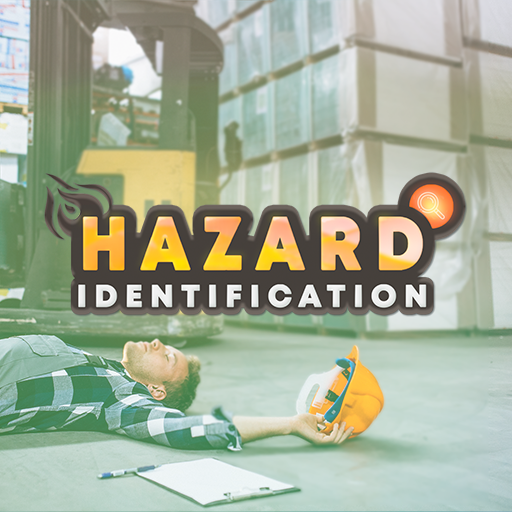
W trakcie szkolenia należy zidentyfikować różnego rodzaju zagrożenia na hali produkcyjnej i wdrożyć odpowiednie postępowanie, m.in.: 1. ZASTAWIONE CIĄGI KOMUNIKACYJNE 2. PORUSZANIE SIĘ PO NIEWYZNACZONYCH CIĄGACH KOMUNIKACYJNYCH 3. HAŁAS 4. ZAGROŻENIA OCZU 5. RĘCZNE PRACE TRANSPORTOWE 6. PORUSZAJĄCE SIĘ ELEMENTY MASZYN 7. ZASTAWIONY SPRZĘT PPOŻ ORAZ WYJŚCIA EWAKUACYJNE 8. PRACA W OBRĘBIE WÓZKA WIDŁOWEGO 9. PRACA W OBRĘBIE SUWNICY 10. 5S