
Kurse im Industry-Tarif
In diesem Abonnement verfügbare VR-Trainingskurse: 18.
 Dauer: 15 Min.
5S-Methodik
Die Anwendung behandelt jede der 5S-Methoden Schritt für Schritt: Sortieren, Systematisierung, Reinigung, Standardisierung und Selbstdisziplin. Am Ende wird der Spieler einem kleinen Test unterzogen, um das erlangte Wissen zu überprüfen.
 Dauer: 60 Min.
Verankerungspunkte
Verankerungspunkte ist eine kurze, aber beeindruckende VR-Erfahrung, die den Arbeitern die schwerwiegenden Folgen des Vernachlässigens der persönlichen Schutzausrüstung bei Arbeiten in der Höhe verdeutlichen soll. Dieses immersive Modul geht über traditionelle Sicherheitsvideos oder Präsentationen hinaus. Anstatt den Arbeitern einfach die Risiken zu erklären, ermöglicht es ihnen, die potenziellen Folgen in einer sicheren, kontrollierten virtuellen Umgebung zu erleben. Das Programm vermittelt ein intensives Verständnis dafür, was passiert, wenn Sicherheitsprotokolle ignoriert werden, wie zum Beispiel ein Sturz von einer hohen Struktur ohne die richtigen Ankerpunkte oder Sturzsicherungssysteme.
 Dauer: 10 Min.
BLS und AED im Stadion
BLS & AED im Stadion VR Training versetzt die Teilnehmer in ein dynamisches Fußball-Szenario, in dem jede Sekunde zählt. Während der Vorbereitung auf einen Elfmeter erleidet der Torwart plötzlich einen Herz-Kreislauf-Stillstand. Deine Aufgabe ist es, die HLW durchzuführen und den AED gemäß den europäischen Standards zu verwenden, um ihm das Leben zu retten. Zusätzlich zu den Wiederbelebungsmaßnahmen umfasst das Training: - Aufbauen einer Sichtschutzwand, um den Bereich abzusichern und Privatsphäre zu gewährleisten. - Zusammenarbeit mit anderen Spielern zur Koordination der Rettungsmaßnahmen. - HLW- und AED-Training in VR mit der Möglichkeit, beliebige Trainingspuppen für realistische Übungen zu integrieren.
 Dauer: 15 Min.
AED & BLS in der Fabrik
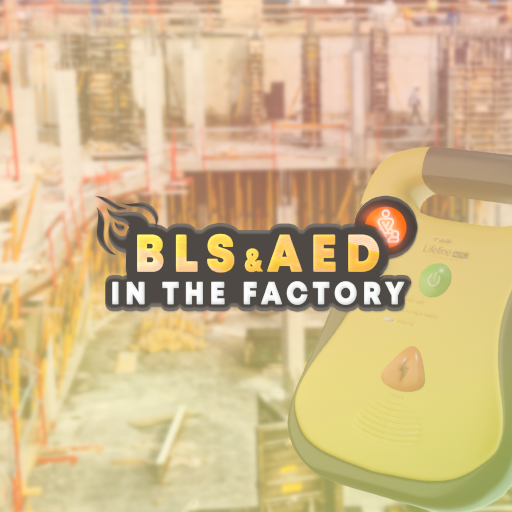
SOLO – Unsere Aufgabe ist es, das Bewusstsein, die Atmung zu überprüfen, die Rettungsdienste zu benachrichtigen und die Wiederbelebung mit einem AED durchzuführen. In der Anwendung üben wir ein Szenario, in dem wir allein sind, daher führen wir alle Maßnahmen selbstständig aus. TRAINING – Während des Trainings führt uns ein virtueller Trainer durch das Wiederbelebungsverfahren bei plötzlichem Herzstillstand. Die gesamte Aktion findet auf dem Betriebsgelände statt. Während des Trainings verwenden wir den automatischen Defibrillator Lifeline. Unsere Aufgabe ist es, das Bewusstsein, die Atmung zu überprüfen, die Rettungsdienste zu benachrichtigen und die Wiederbelebung mit dem AED durchzuführen. TEST – Wir haben völlige Freiheit bei der Wahl, wie wir Leben retten. Zu Beginn treten Gefahren sowohl für den Retter als auch für den Verletzten auf. Um das Spiel schwieriger zu machen, wird jedes Mal, wenn wir das Spiel neu starten, eine der 3 Gefahren zufällig ausgewählt. Diese Herangehensweise stellt sicher, dass jeder Test anders ist und vom Benutzer spezifische Maßnahmen erfordert.
 Dauer: 10 Min.
BLS & AED in der U-Bahn
BLS & AED im U-Bahn VR Training versetzt die Teilnehmer in eine plötzliche Herz-Kreislauf-Stillstand-Situation an einer U-Bahn-Station. Deine Aufgabe ist es, die HLW durchzuführen und den AED gemäß den europäischen Standards zu verwenden, während du die Maßnahmen mit den anwesenden Zeugen koordinierst. Dieses einzigartige Modul entwickelt Führungs- und Kommunikationsfähigkeiten durch Spracherkennung, die es dir ermöglicht, Befehle an virtuelle Zeugen zu erteilen. Die Teilnehmer üben das Delegieren von Aufgaben – wie das Rufen von Rettungsdiensten, das Holen des AED oder das Helfen bei der HLW – was sie auf eine effektive Leitung der Aktion im echten Leben vorbereitet.
 Dauer: 8 Min.
BLS zu Hause
BLS zu Hause VR Training versetzt die Teilnehmer in ein realistisches Hausszenario, in dem sie eine bewusstlose Person antreffen. Das Ziel ist es, die Vitalfunktionen zu überprüfen, den Rettungsdienst zu rufen und die betroffene Person in die stabile Seitenlage zu bringen. Die Simulation nutzt Spracherkennung, um eine realistische Interaktion mit dem Rettungsteam zu ermöglichen und das Vertrauen sowie die Kommunikationsfähigkeiten in kritischen Momenten zu stärken. Dieses Modul bereitet die Teilnehmer darauf vor, in Notfällen zu Hause ruhig und effektiv zu handeln und sicherzustellen, dass sie wissen, wie sie reagieren müssen, wenn jede Sekunde zählt.
 Dauer: 10 Min.
Chemikalienauslauf
Die Schulung konzentriert sich darauf, Mitarbeitende auf ein sicheres Verhalten im Falle eines chemischen Lecks vorzubereiten. Der Theorieteil umfasst eine Einführung in das Thema, die Besprechung von Sicherheitsdatenblättern (SDB), persönliche Schutzausrüstung (PSA), Alarmsignale sowie verschiedene Arten chemischer Stoffe und deren Eigenschaften. Der Praxisteil besteht aus einer Leckagesimulation, bei der die Teilnehmenden lernen, die Situation einzuschätzen, Alarm auszulösen, die Ausbreitung einzudämmen, (wenn möglich) zu neutralisieren, Abfälle zu beseitigen sowie Reinigungs- und Dekontaminationsmaßnahmen durchzuführen.
 Dauer: 10 Min.
Wundversorgung
In diesem Training müssen wir die Blutung eines verletzten Bauarbeiters stoppen. Das Szenario findet auf der Baustelle statt. Wir lernen, wie wir die Blutung stoppen, indem wir Druck auf die Wunde ausüben und einen Druckverband anlegen. Der virtuelle Trainer führt uns Schritt für Schritt durch das medizinische Verfahren.
 Dauer: 10 Min.
Evakuierung über eine Leiter
Unsere Aufgabe ist die Evakuierung zum Korb der Feuerwehrleiter. Die gesamte Veranstaltung findet auf einer Höhe von 10 Etagen statt. Der Teilnehmer muss seine Höhenangst überwinden und 2 Meter über den Steg laufen, um die Feuerwehrleute zu erreichen.
 Dauer: 15 Min.
Grundlagentraining im Umgang mit Feuerlöschern
Während der Schulung lernen wir die Brandklassen kennen. Ein virtueller Feuerwehrmann erklärt uns die Bedeutung der einzelnen Piktogramme. Zusätzlich erhalten wir Aufgaben zur Anwendung eines Feuerlöschers und zur Brandbekämpfung. Die gesamte Schulung findet vor einer Feuerwache statt. In der nächsten Lektion beschäftigen wir uns mit einem Brand in einem Stromverteilerkasten – ein recht häufiger Brandtyp. In der virtuellen Umgebung lernen wir den richtigen Umgang mit dem Feuerlöscher bei elektrischen Geräten. Der virtuelle Feuerwehrmann erklärt, wie man einen solchen Brand sicher löscht. Während der Schulung verwenden wir einen Feuerlöscher sowie den Brandschutz-Notschalter zur Stromabschaltung.
 Dauer: 15 Min.
Brandschutztraining - Evakuierung
Die Anwendung ist so konzipiert, dass jeder die gesamte Evakuierungsprozedur durchlaufen kann. Zuerst üben wir das Szenario, was zu tun ist, wenn ein Feueralarm ertönt. Während dieses Szenarios lernen wir, Alarmtöne zu erkennen, mit Evakuierungsplänen zu arbeiten, Symbole zu identifizieren und mit der Feuerwehr zusammenzuarbeiten. Im nächsten Szenario üben wir das Verhalten bei der Entdeckung eines Feuers. Während dieses Szenarios müssen wir den Handfeueralarm, Feuerlöscher, Hydranten und den Brandschutz-Stromschalter benutzen. Unsere Aufgabe ist es, das Feuer zu löschen und das Gebäude zu evakuieren. Im Test muss die geschulte Person das Gebäude selbstständig und ohne Hinweise des Erzählers in der richtigen Reihenfolge evakuieren oder das Feuer löschen. Am Ende bewertet die Anwendung unser Verhalten. Das Szenario geht von einem Feuer im Küchenbereich eines virtuellen Bürogebäudes aus.
 Dauer: 40 Min.
Gabelstapler
Forklift VR Training ist ein immersives Training, das entwickelt wurde, um die Sicherheit beim Bedienen von Gabelstaplern zu verbessern und die Mitarbeiter auf die Prüfung des Amts für Technische Aufsicht vorzubereiten. Das Programm besteht aus 4 interaktiven Modulen, jedes etwa 10 Minuten lang, was insgesamt 40 Minuten praktisches Training ergibt.
 Dauer: 10 Min.
Gefährdungsidentifikation
Während der Schulung müssen verschiedene Gefahren in der Produktionshalle identifiziert und entsprechende Maßnahmen ergriffen werden, einschließlich: 1. BLOCKIERTE KOMMUNIKATIONSWEGE 2. BEWEGUNG AUSSERHALB DER FESTGELEGTEN KOMMUNIKATIONSWEGE 3. LÄRM 4. GEFAHREN FÜR DIE AUGEN 5. MANUELLE TRANSPORTARBEITEN 6. BEWEGLICHE TEILE VON MASCHINEN 7. BLOCKIERTE FEUERLÖSCHGERÄTE UND NOTAUSGÄNGE 8. ARBEITEN IM BEREICH VON GABELSTAPLERN 9. ARBEITEN IM BEREICH VON KRANEN 10. 5S
 Dauer: 25 Min.
Lockout Tagout
Lockout Tagout ist eine Trainingsanwendung, die Produktionsmitarbeitern hilft, ihre Fähigkeiten im sicheren Sichern von Maschinen zu erwerben und zu verbessern. Die Anwendung besteht aus vier Modulen: Das Schulungsmodul enthält interaktive Lektionen, die den Mitarbeitern die verschiedenen Arten von Energie in Maschinen und deren richtige Sicherung beibringen. Das Testmodul ermöglicht es den Mitarbeitern, das eigenständige Sichern von Maschinen in realen Szenarien zu üben.
 Dauer: 10 Min.
Manuelle Transportarbeit
Manuelle Transportarbeit umfasst alle Tätigkeiten, bei denen Gegenstände mit menschlicher Muskelkraft bewegt werden. Auch wenn automatisierte Systeme zunehmend diese Aufgaben übernehmen, spielt körperliche Arbeit weiterhin eine wichtige Rolle. Ziel dieser Anwendung ist es, Situationen zu erläutern und darzustellen, um Unfälle und Verletzungen zu vermeiden.
 Dauer: 6 Min.
Lagerhallenbrand
Die VR-Simulation „Brand im Lager“ ist ein praktisches, immersives Training, das sich an Personen richtet, die für die Brandbekämpfung (Feuerwehrmarschälle) und Mitarbeiter, die für Brandschutzmaßnahmen und Evakuierung verantwortlich sind, bestimmt sind. Die Anwendung wurde gemäß den Sicherheitsvorschriften der USA (OSHA 29 CFR 1910.38(e), NFPA Emergency Action Plans – Modul 4) entwickelt, berücksichtigt jedoch auch polnische Vorschriften: das Arbeitsgesetzbuch, die Verordnung des MSWiA vom 7. Juni 2010 sowie die Brandschutzanweisung (IBP).
 Dauer: 85 Min.
Arbeiten in geschlossenen Räumen
Work in Confined Spaces VR Training ist eine umfassende Simulation, die Benutzer darauf vorbereitet, bei der Arbeit in gefährlichen engen Räumen die richtigen Verfahren einzuhalten. Die Teilnehmer üben Aufgaben wie das Öffnen von Einstiegslücken, Belüftung, atmosphärische Messungen und die Beurteilung des technischen Zustands von Tanks. Das Training vermittelt grundlegende Fähigkeiten, darunter: Absichern des Arbeitsbereichs und Einsatz geeigneter Schutzmaßnahmen. Korrekte Verwendung von PSA bei der Arbeit in engen Räumen. Erkennen von und Reagieren auf Gefahren wie giftige Dämpfe oder Sauerstoffmangel. Üben von Einsteigeverfahren, sicheres Arbeiten in Tanks und Evakuierung im Notfall. Durch realistische Szenarien ermöglicht die VR-Anwendung den Benutzern, Aufgaben in engen Räumen sicher zu üben, was die Vorbereitung, die Einhaltung von Vorschriften und die Arbeitssicherheit verbessert.
 Dauer: 20 Min.
Arbeiten in der Höhe
Unfallstatistiken zeigen eindeutig, dass Arbeiten in der Höhe besondere Aufmerksamkeit und das richtige Wissen erfordern. Wie kann ein Sturz des Arbeiters verhindert werden? Wie führt man eine Evakuierung durch, wenn ein Arbeiter in einer gefährlichen Situation ist? Die Antwort ist unser innovatives Training, das nicht nur das Risiko minimiert, sondern auch unvergessliche Erlebnisse und umfassendes Wissen vermittelt und somit zu einem wichtigen Werkzeug für die Durchführung von Arbeitsschutzschulungen wird. Die Anwendung besteht aus 3 Teilen: - Kontrolle und Auswahl von Ausrüstungen für Arbeiten in der Höhe - Vertikale Absturzsicherungssysteme - Evakuierung aus der Höhe